An industrial manipulator is an operator controlled ergonomic lifting and positioning system designed to safely move, balance, rotate, lift, and precisely position industrial loads.
Industrial manipulators are used in manufacturing environments where manual handling creates operational risks, ergonomic problems, positioning difficulties, or production inefficiencies. Unlike traditional lifting equipment, manipulators are designed for continuous operator interaction and controlled load movement.
Industrial manipulator applications
Modern industrial manipulators are commonly used for:
- Heavy component handling
- Precision positioning operations
- Off center load manipulation
- Repetitive lifting processes
- Ergonomic assembly operations
- Production line handling systems
- Machine loading and unloading
- Drum and reel handling
- Automotive component handling
- Aerospace and defense applications
Industrial manipulators are essential ergonomic production systems in modern manufacturing.
Why Are Industrial Manipulators Used?
Manual handling operations create serious production and safety problems in industrial environments. As production speed increases and components become heavier or more complex, traditional manual lifting methods become inefficient and unsafe.
Typical industrial handling problems include:
- Operator fatigue
- Repetitive strain injuries
- Inconsistent positioning
- Product damage risks
- Load instability
- Swinging components
- Unsafe lifting conditions
- Low positioning precision
- Slow cycle times
- Difficulty handling eccentric loads
Industrial manipulators solve these problems by creating a controlled balancing environment between the operator and the load. The manipulator carries the load weight pneumatically while the operator controls movement and positioning.
This creates a safer, more ergonomic and more efficient handling process.
How Does a Pneumatic Manipulator Work?
A pneumatic manipulator uses compressed air to balance the load weight. The system continuously compensates the load and creates a near weightless movement condition known as the zero gravity effect. The operator does not carry the actual load weight; the operator controls the direction, movement and positioning of the load.
A pneumatic manipulator system may include:
- Pneumatic balancing cylinders
- Dual rope balancing systems
- Rigid arm structures
- Pneumatic rotation systems
- Mechanical braking systems
- Pneumatic safety valves
- Custom gripper systems
- Rail mounted movement systems
- Operator control systems
What Is the Zero Gravity Effect?
The zero gravity effect is the balancing principle used in pneumatic manipulator systems. The manipulator compensates the load weight using compressed air and creates a floating handling condition. As a result, the operator feels very low resistance during movement.
This provides several important advantages:
- Reduced operator fatigue
- Better positioning precision
- Improved ergonomic conditions
- Faster operation
- Reduced physical stress
- Safer repetitive handling
Zero gravity handling systems are especially important in continuous production environments where repetitive lifting operations occur throughout the working day.
Zero gravity effect — operating principle
Rope Manipulators
Rope type manipulators use steel ropes connected to pneumatic balancing systems. These systems are preferred for fast, flexible and ergonomic industrial handling applications.
They are commonly used for: box handling, packaging operations, medium weight industrial products, repetitive assembly operations, fast production lines, and general industrial lifting applications.
Advantages: high movement flexibility, fast cycle operation, large working area, smooth operator control, low operator fatigue, excellent ergonomic handling.
Advanced dual rope systems provide an additional safety advantage. Two independent steel ropes support the balancing mechanism and create an additional mechanical safety layer.
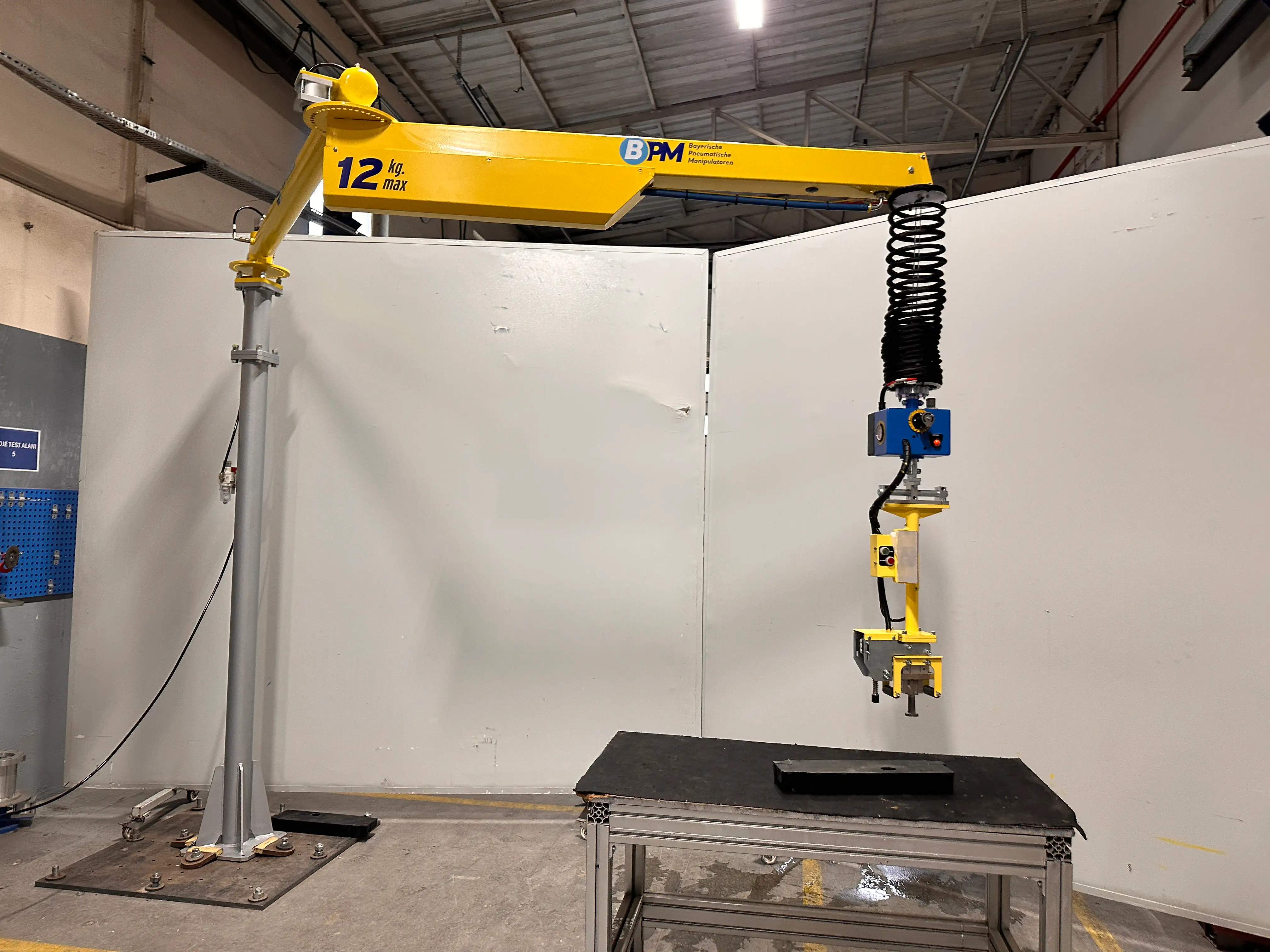 Rope manipulator — flexible movement
Rigid Arm Manipulators
Rigid arm manipulators use solid arm structures instead of balancing ropes. These systems are designed for difficult industrial handling applications where load stability is critical.
Rigid arm manipulators are ideal for: off center loads, eccentric products, heavy industrial parts, swing free movement, precision positioning operations, controlled rotation applications, and large industrial components.
Rigid arm technology provides significantly higher positional stability compared to traditional rope systems.
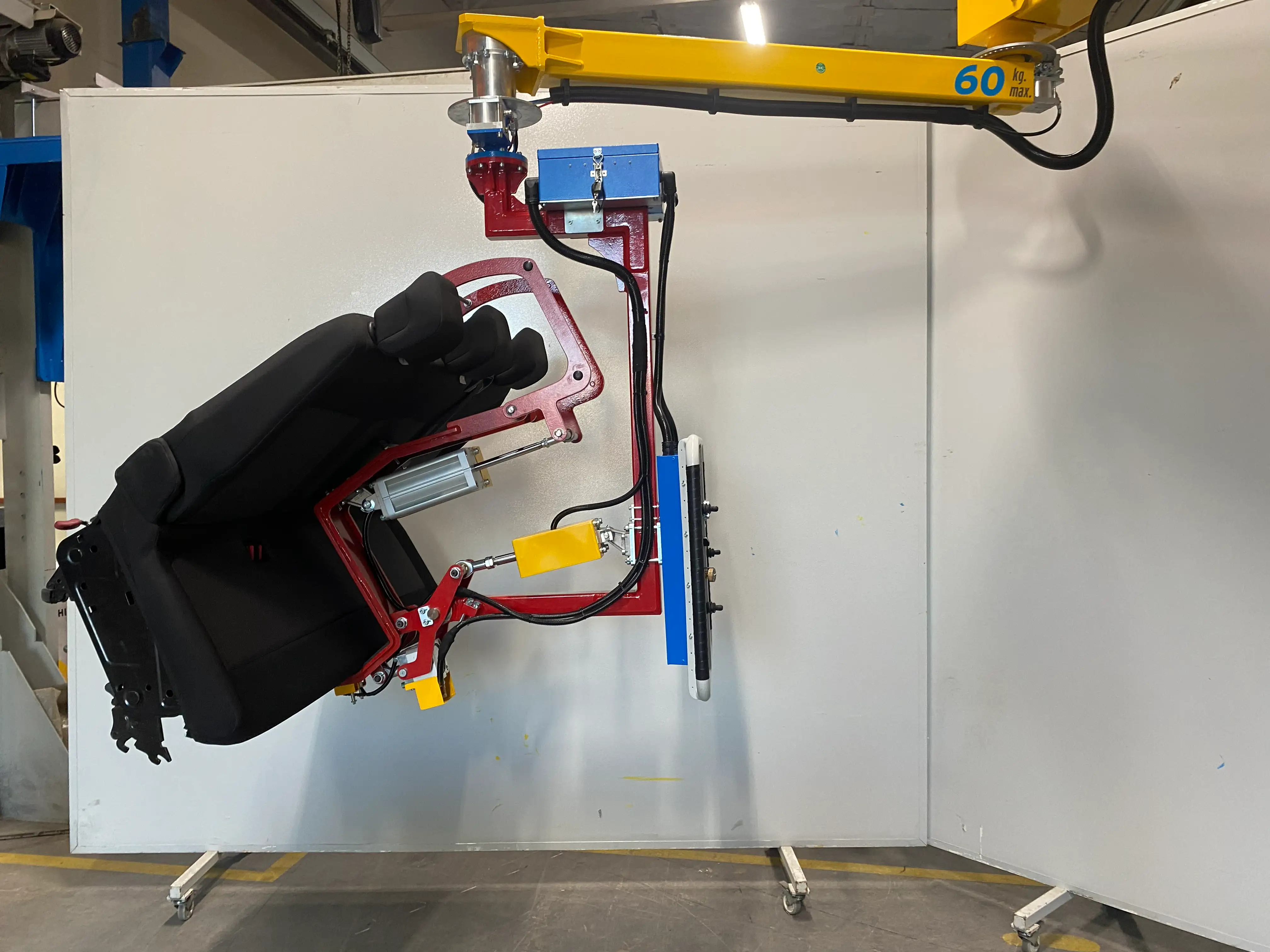 Rigid arm — stable load control
Why Off Center Loads Create Handling Problems
Off center loads create instability because the center of gravity is not aligned with the lifting axis. In traditional lifting systems, eccentric loads may create swinging movement, rotational instability, positioning difficulty, operator control problems, unsafe handling conditions, and product damage risk.
Rigid arm manipulators are specifically engineered to reduce these problems. The solid arm structure mechanically stabilizes the load and prevents uncontrolled swinging. This is one of the main reasons rigid arm manipulators are preferred in automotive, heavy industry, defense, drum handling and reel handling applications.
Pneumatic Manipulators vs Servo Systems
Pneumatic manipulators and servo based lifting systems use different engineering principles. Servo systems typically use electric motors and software controlled movement logic. Pneumatic manipulators use compressed air balancing technology and direct operator interaction.
Advantages of pneumatic manipulators include:
- Natural shock absorption
- Smooth operator interaction
- Lower maintenance requirements
- Simpler mechanical structure
- Reliable continuous operation
- Excellent ergonomic response
- Better suitability for harsh industrial environments
Compressed air systems naturally absorb sudden load variations and create smoother handling characteristics during repetitive industrial operations.
Industrial Manipulator Safety Systems
Safety is one of the most critical engineering aspects of industrial manipulator design.
Modern manipulator systems may include:
- Pneumatic safety valves
- Mechanical safety brakes
- Load holding systems
- Pressure monitoring systems
- Presence detection sensors
- Emergency stop systems
- Controlled movement systems
- CE compliant safety architecture
Industrial manipulator safety must be evaluated according to the load type, gripper type, movement requirement and working environment.
Industrial Manipulator Applications
Industrial manipulators are used across a wide range of industries.
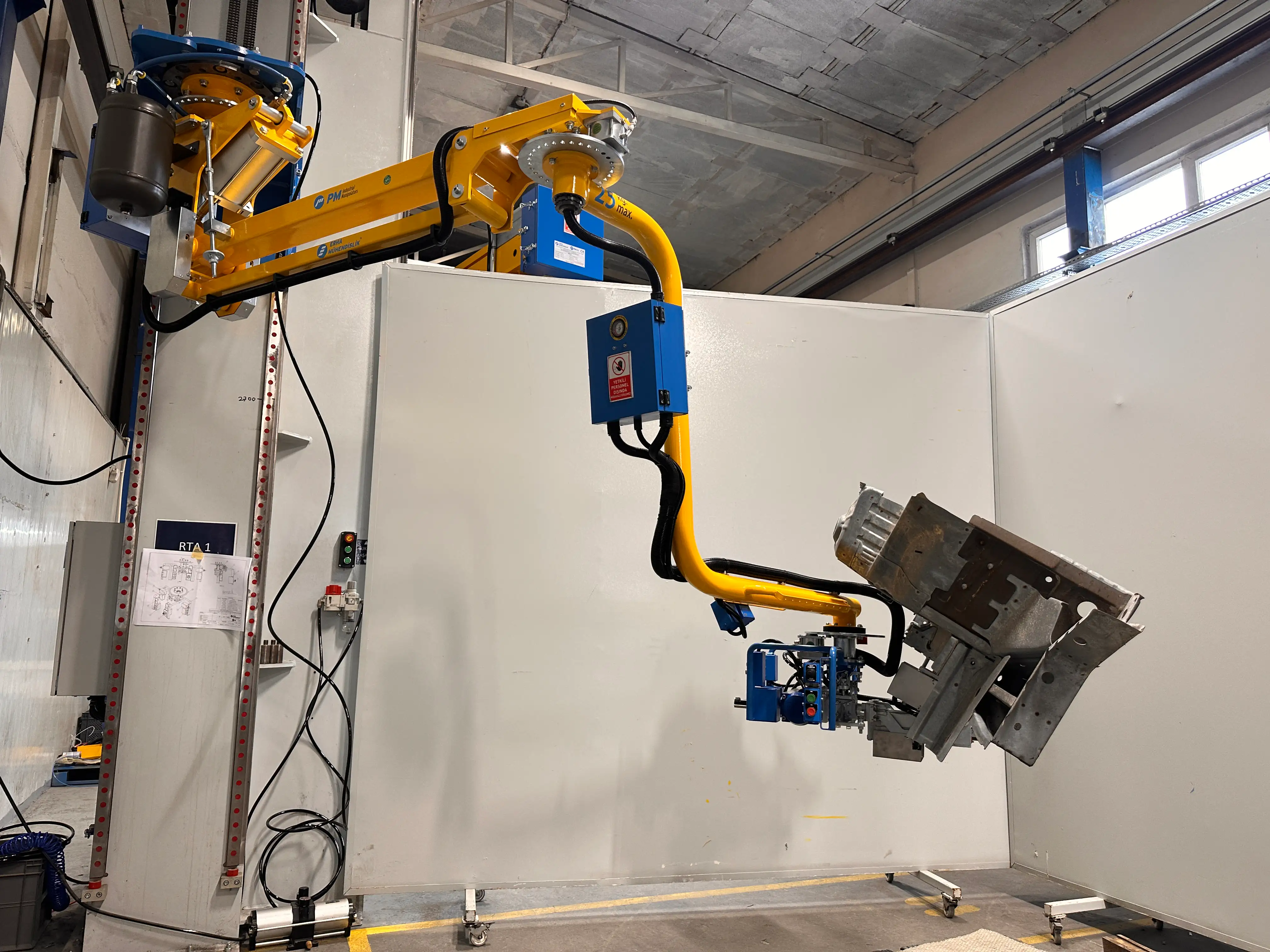
Automotive Industry
Chassis components, brake systems, engine parts, seat structures, battery systems, exhaust components, and axle components. Rigid arm systems are preferred because many automotive parts are eccentric and difficult to stabilize manually.
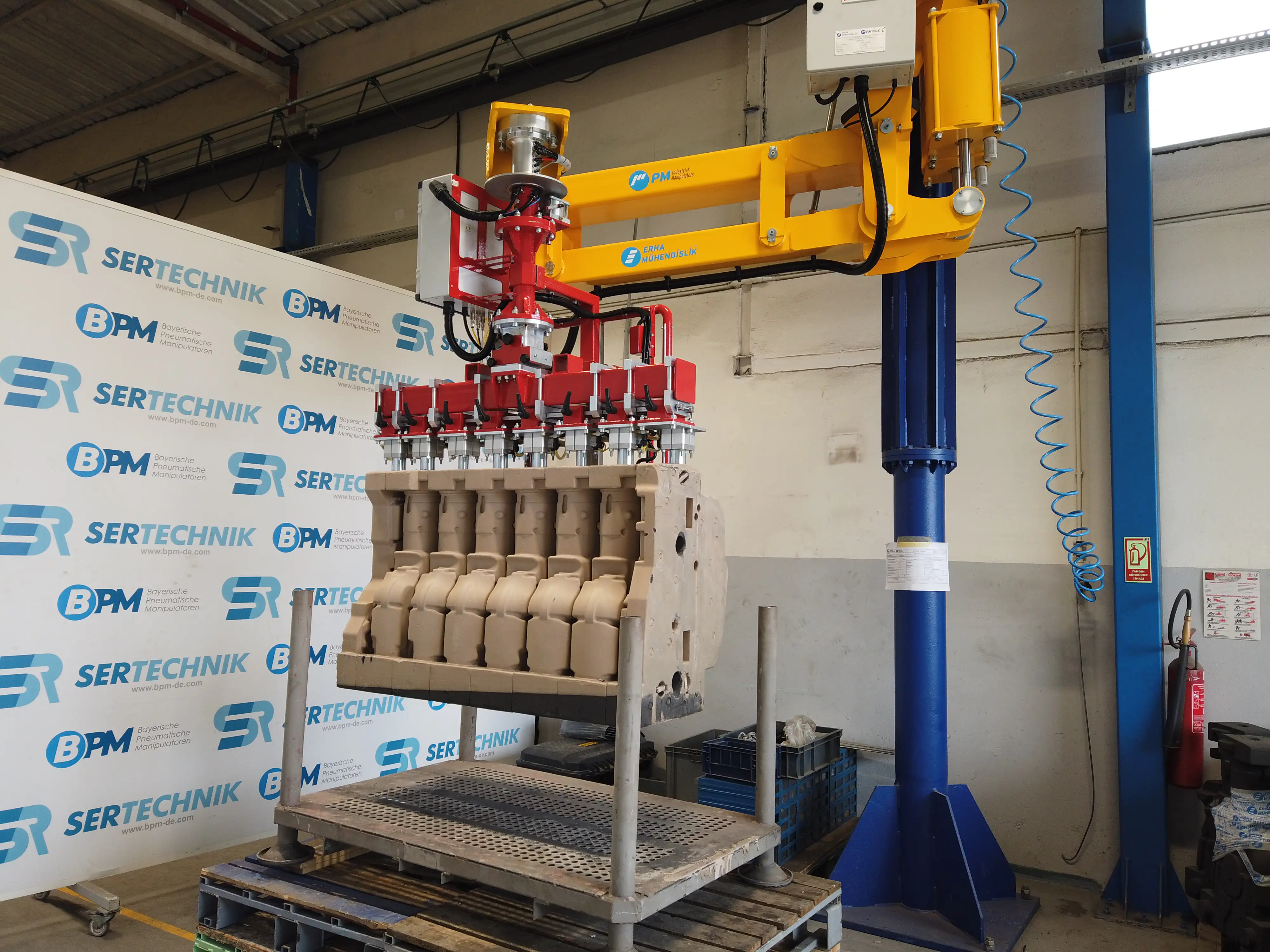
Foundry Industry
Foundry cores, cast components, mold positioning, heavy metal parts, and surface treatment operations. Pneumatic systems are suitable for harsh industrial foundry environments.
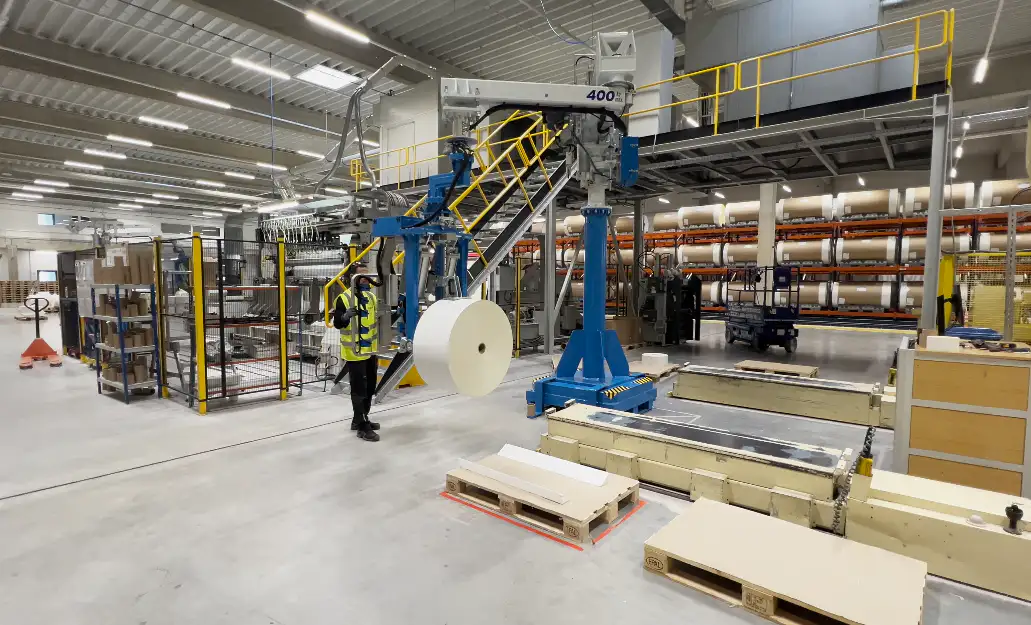
Reel and Bobbin Handling
Pneumatic rotation systems, rigid arm stabilization, controlled gripping systems, and off center load balancing for paper, cable, packaging and converting industries.
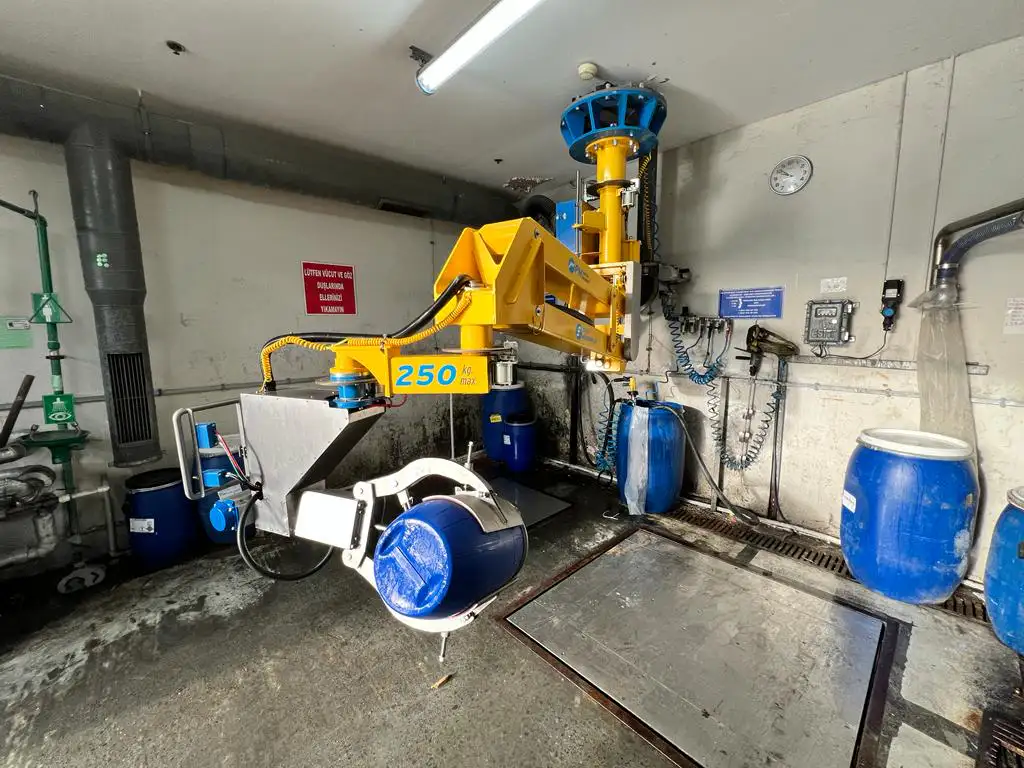
Drum Handling
Drum lifting, barrel rotation, controlled emptying operations, chemical production environments, and ATEX related applications where controlled pneumatic rotation is critical.
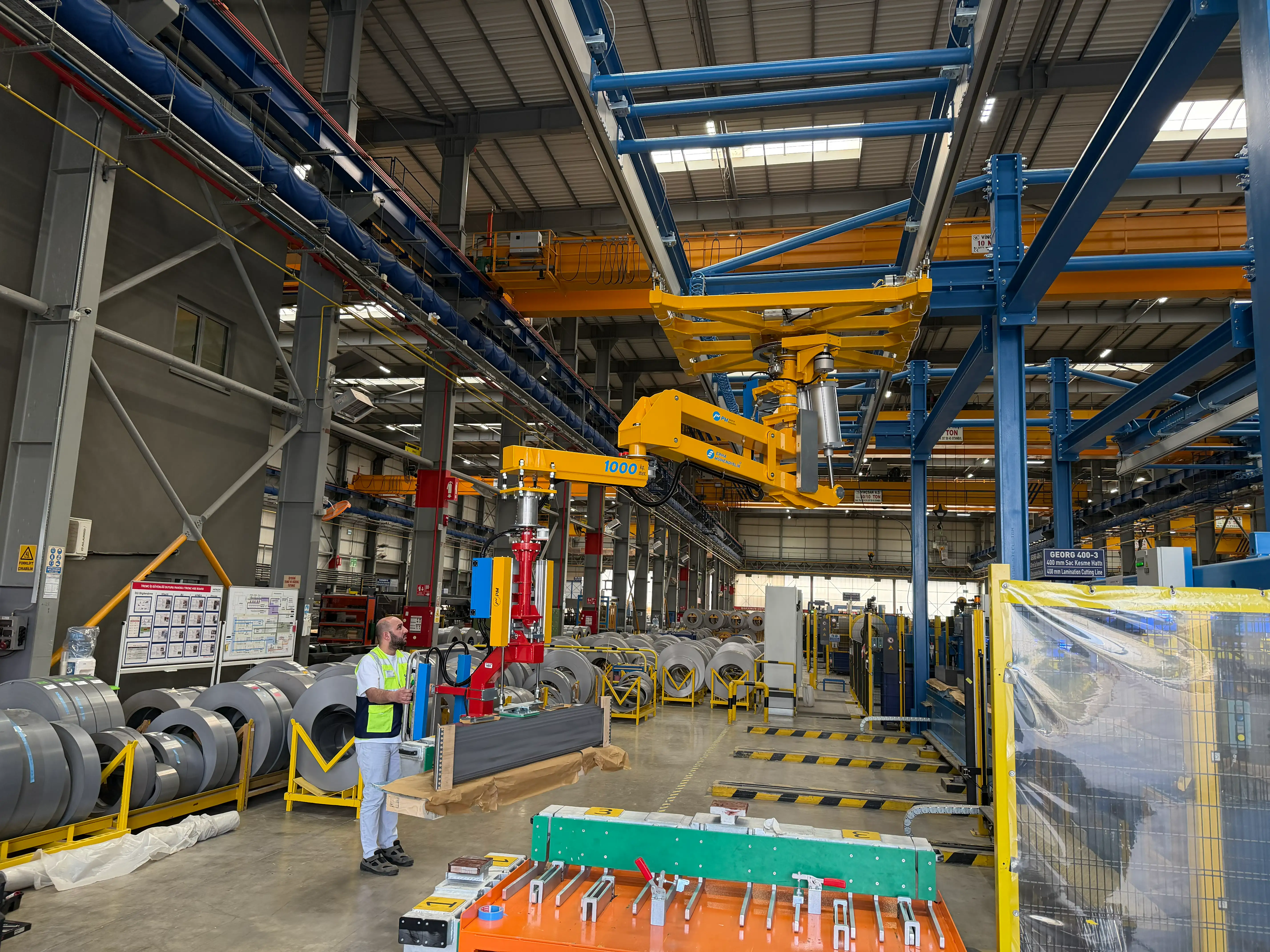
Rail Mounted Manipulator Systems
Larger working coverage, multiple station operation, production flexibility, ergonomic accessibility, and line integration on overhead, bridge, aluminum or steel rail constructions.
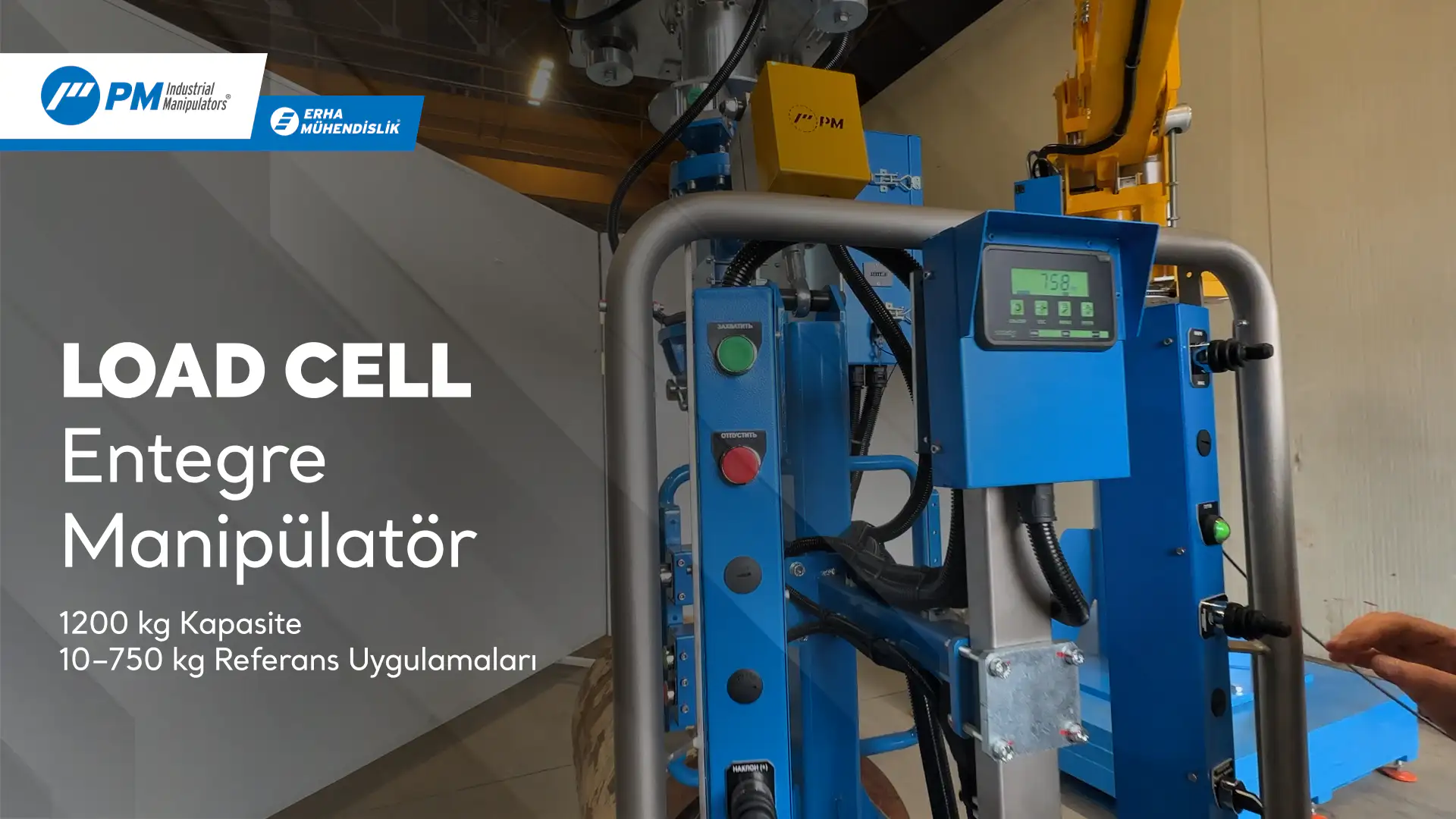
Custom Gripper Engineering
Pneumatic grippers, vacuum systems, magnetic systems, mechanical clamping, hook systems, expanding mandrels, and custom engineered tooling affecting safety, protection, precision and speed.
Defense Industry
Defense industry handling operations require high precision and maximum operational safety for ammunition handling, rocket component positioning, heavy cylindrical products, and precision assembly. Rigid arm stabilization is critical because uncontrolled movement cannot be tolerated.
Why PM Manipulators?
PM Manipulators is an industrial pneumatic manipulator brand developed and manufactured by Erha Engineering. Erha Engineering has been active in engineering and manufacturing since 1988.
PM Manipulators is based on:
- More than 37 years of engineering and manufacturing experience
- Real industrial manufacturer identity
- Integrated production capability in Istanbul
- CNC machining infrastructure
- Welding, assembly, painting and quality control processes
- ERP based production planning
- Custom gripper development
- Heavy industrial application experience
- CE and European standards oriented design approach
- Pneumatic balancing expertise
PM Manipulators develops both standard manipulator systems and application specific ergonomic handling solutions for industrial production environments.
Frequently Asked Questions
What is an industrial manipulator?
An industrial manipulator is an operator controlled ergonomic handling system used to lift, move, rotate, balance and precisely position industrial loads.
What is a pneumatic manipulator?
A pneumatic manipulator is a manipulator system that uses compressed air to balance the load weight and allow the operator to move the load with low physical effort.
What is zero gravity handling?
Zero gravity handling is the balancing condition where the manipulator compensates the load weight and allows near weightless movement.
What is the difference between a rope manipulator and a rigid arm manipulator?
A rope manipulator provides flexible and fast movement with steel ropes. A rigid arm manipulator provides higher stability for off center, heavy or difficult loads.
When should a rigid arm manipulator be used?
Rigid arm manipulators should be used for eccentric loads, heavy parts, precise positioning, controlled rotation and swing free handling requirements.
What is the difference between a manipulator and a hoist?
A hoist mainly lifts loads vertically. A manipulator balances the load and allows ergonomic, controlled and precise operator guided movement.
Which industries use industrial manipulators?
Industrial manipulators are used in automotive, foundry, steel, defense, aerospace, chemical, packaging, paper, glass, panel and heavy manufacturing industries.